
What Is a Property Inventory Report and Why Does It Matter?
A property inventory report is a written and photographic record of a rental home: what is in it, and what condition each part is in, on a particular date. It is sometimes called a schedule of condition. Done well, it is the one document both landlord and tenant can point to when they need to agree what has changed over the course of a tenancy.
What a property inventory contains
The National Residential Landlords Association (NRLA) lists the core parts of an inventory in its landlord inventory guidance. It should include:
- time-stamped photographs of the property before the tenancy begins, including after any professional clean
- a description of the exterior, including any garden or garage
- a note of whether electrical appliances work
- the results of smoke and carbon monoxide alarm tests
- gas and electricity meter readings, supported by photographs
- a list of the keys given to the tenant
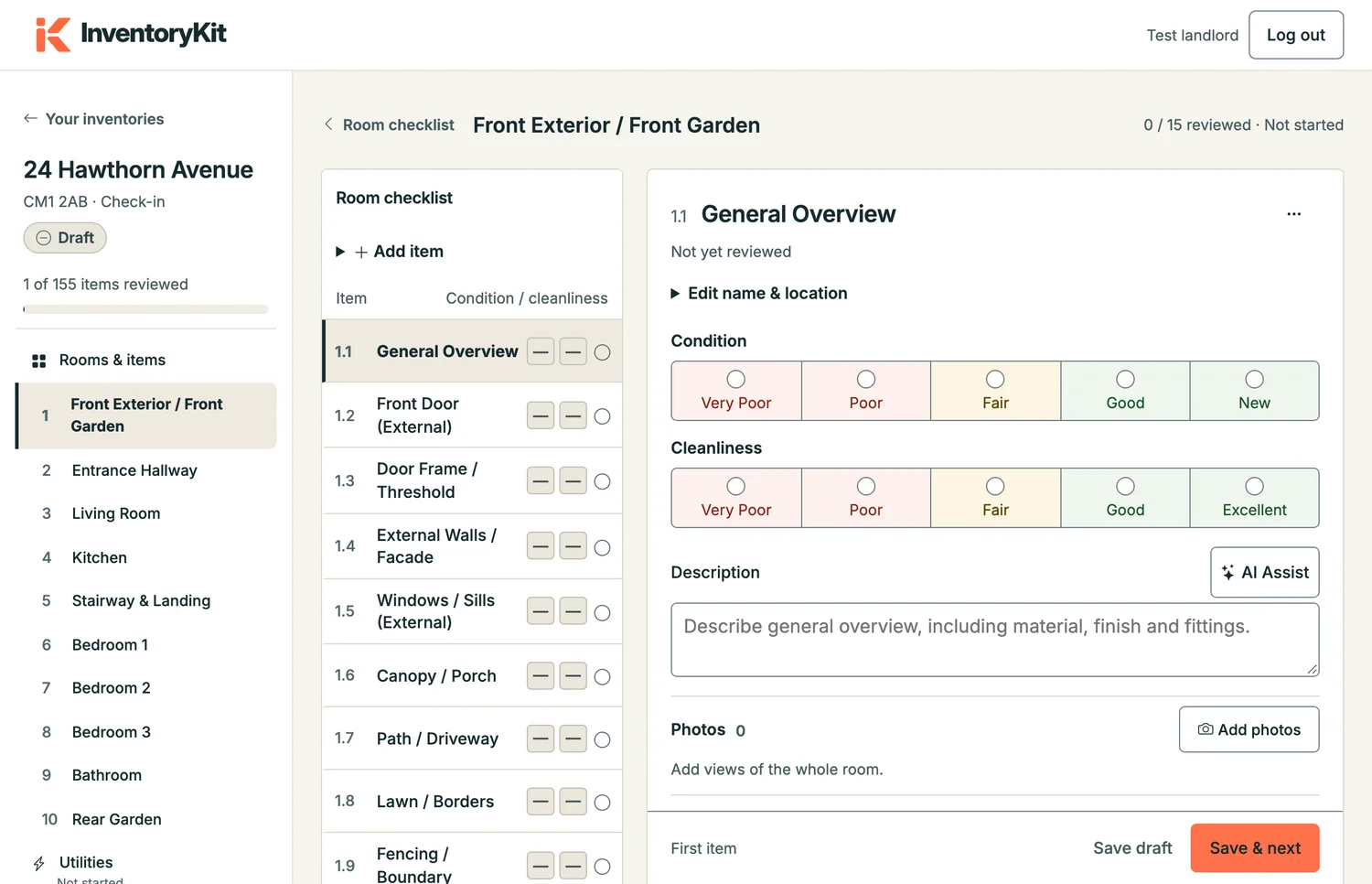
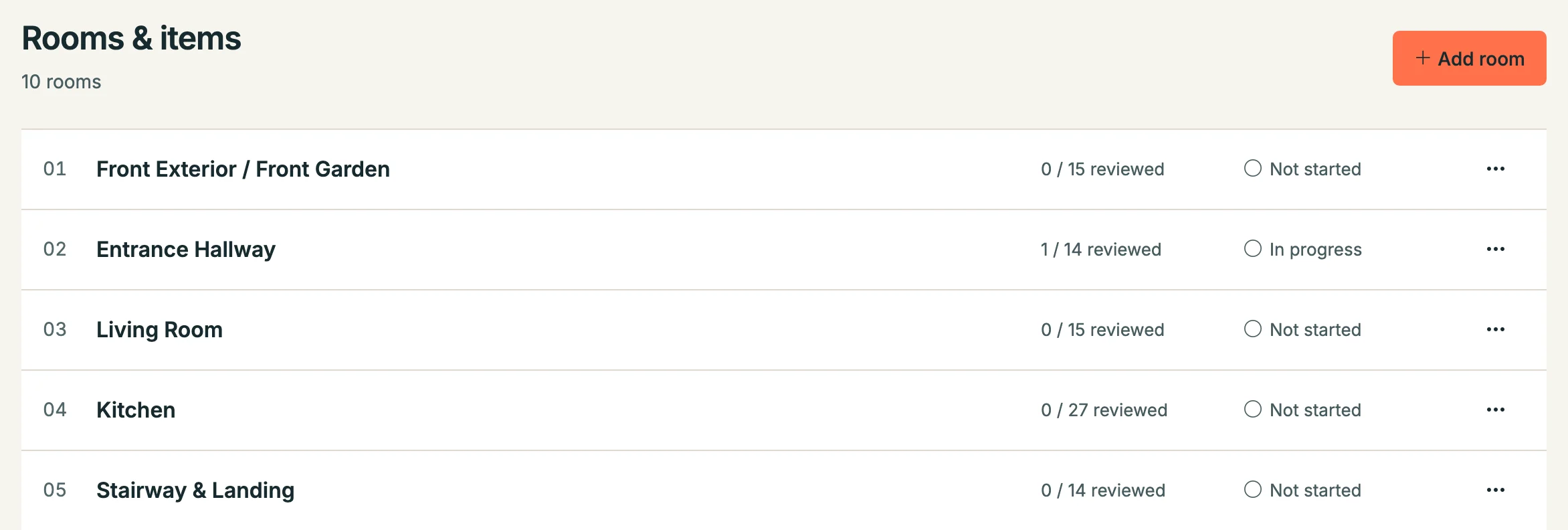
Beyond that list, a good inventory goes room by room. For each item it records what it is, what condition it is in and how clean it is, in specific words rather than general ones.
Why it matters
When a tenancy ends, the landlord and tenant have to agree how much of the deposit, if any, is deducted. If they cannot agree, the deposit stays protected until the matter is settled. GOV.UK says the deposit must be returned within 10 days of you both agreeing how much the tenant gets back.
That is where the inventory does its work. The Deposit Protection Service (DPS) says that evidence is central to a deposit claim, and that an inventory which is unsigned and unsupported by photographs is unlikely to carry sufficient evidential weight. A record made at the start of the tenancy gives you something to compare against at the end. Without it, a claim often becomes one person's word against another's.
What an inventory is not
An inventory records condition. It does not decide who is responsible for any difference. Whether a mark is ordinary wear or something a tenant should pay for is a separate judgement, and we look at it in fair wear and tear vs tenant damage.
An inventory also does not replace the other basics of a tenancy. Deposit rules still apply. GOV.UK says a landlord or letting agent must put a deposit in an approved scheme within 30 days of receiving it. The approved schemes in England and Wales are the Deposit Protection Service, MyDeposits and the Tenancy Deposit Scheme. The deposit itself is capped by the Tenant Fees Act 2019 at five weeks' rent where the annual rent is under £50,000, and six weeks' rent where it is £50,000 or more.
Rules have been changing
Private renting in England changed on 1 May 2026. GOV.UK now says assured periodic tenancies replaced assured shorthold tenancies. Nothing about that changes the value of a clear, dated record of condition, but it is worth reading the current GOV.UK guidance for landlords so that the rest of your paperwork matches the rules that now apply.
When to make one
The most useful inventory is made shortly before, or on the day, a tenant moves in, while the property is empty or just as it will be handed over. mydeposits advises that tenants should be given the chance to attend and check it, and a reasonable period to propose amendments. It describes seven to ten days as the industry standard.
The short version
- An inventory is a dated record of a property's contents and condition.
- It is most useful as a baseline to compare against at the end of the tenancy.
- Photographs, meter readings, keys and alarm checks belong in it.
- It records condition. It does not decide liability.
If you want a structured way to build one yourself, see how a Check-In inventory works in InventoryKit, or read our guide to creating a property inventory.
This article is general information for landlords in England and is not legal advice.